Mostly about building products, healthcare tech, and lessons learned along the way.
Loading articles
Why Your LLM Evaluator Is Lying to You | Clint Johnson
Why Your LLM Evaluator Is Lying to You
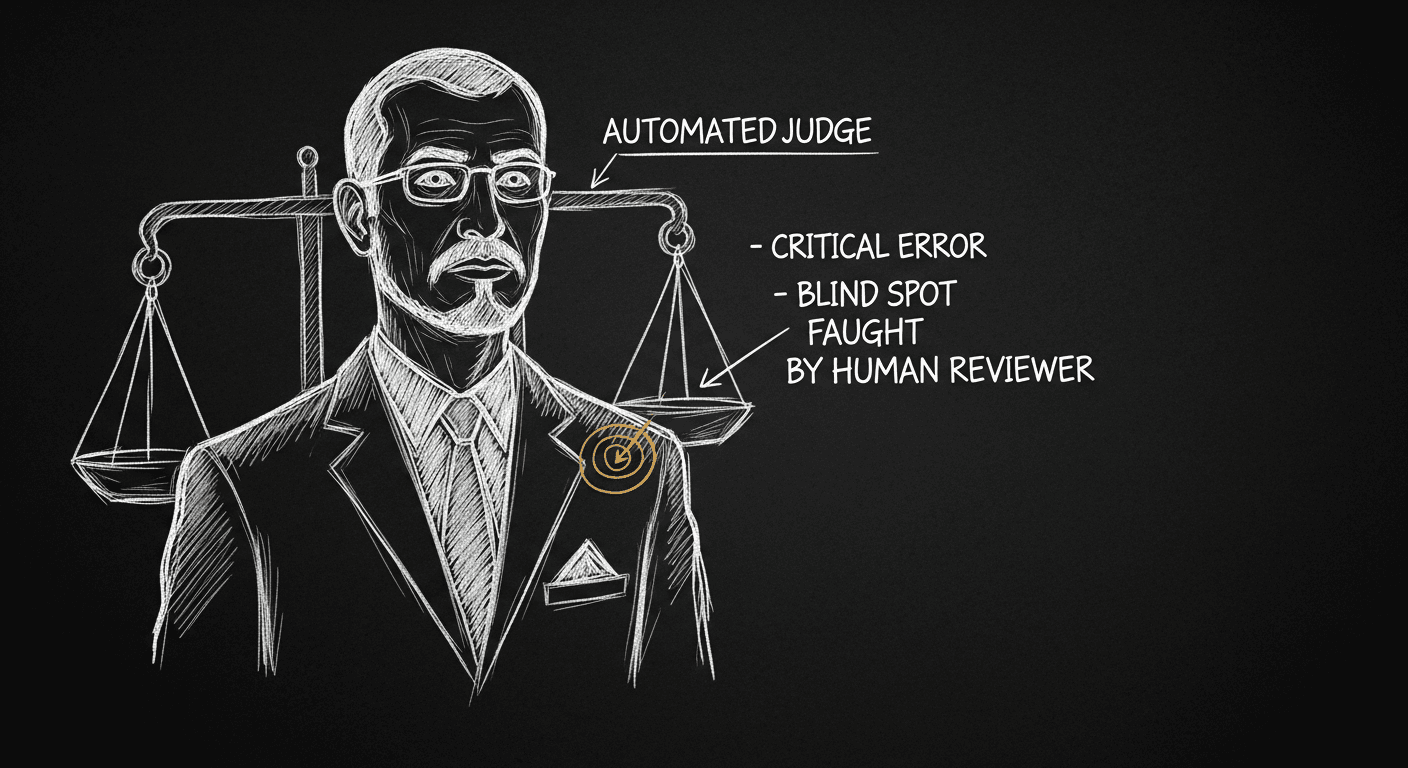
The pharmacist caught what the judge missed
A team I know built an LLM evaluator to score their clinical response system before launch. They tuned it carefully. They ran it against hundreds of outputs. The pass rates looked solid — consistently above 85%. The team felt confident. They shipped.
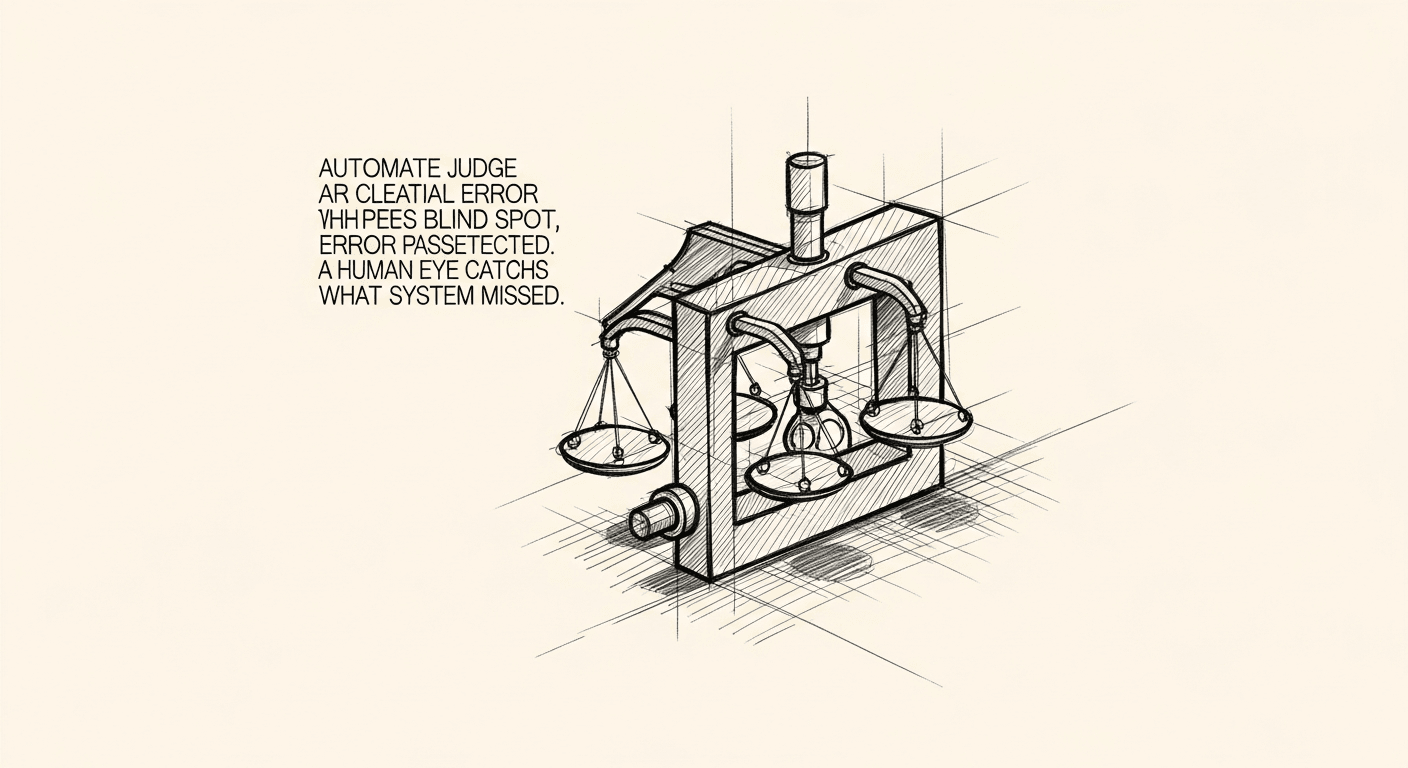
Two weeks later, a pharmacist working in the pilot flagged something: the system was generating drug interaction guidance that was technically accurate in isolation but dangerously incomplete for patients on polypharmacy regimens. Not hallucinated. Not obviously wrong. Just missing the context that would have changed the clinical decision. The LLM judge had been scoring those outputs as high quality the entire time.
The evaluator wasn't lying maliciously. It was doing exactly what LLM judges do: pattern-matching on fluency, coherence, and surface-level correctness. It had no idea what it was missing, because the things it was missing required clinical judgment to even recognize as missing.
That's the core problem with LLM-as-judge. It's not that it doesn't work at all. It fails precisely on the cases that matter most.
Why LLM Judges Feel So Compelling
The pitch is clean: instead of expensive human review, you use a capable model to evaluate your outputs at scale. You get numeric scores, aggregate metrics, automated pass/fail decisions. Your eval suite runs in minutes instead of days. You can instrument it into your CI pipeline. You can track trends over time.
All of that is real. I've built LLM judges. I use them. They're a legitimate part of a quality stack.
The problem is the confidence they produce. When a dashboard shows you 87% pass rates across 500 outputs, the human brain pattern-matches to "we have quality under control." The number feels authoritative. Teams stop reading their outputs. The manual review cadence slips. The human reviewer who was catching edge cases every Friday gets pulled onto something else because "the automated eval is handling it."
And then the pharmacist finds the drug interaction problem.
Where LLM Judges Actually Fail
LLM judges have three structural failure modes that automated metrics can't self-report.
They share the same blind spots as the system they're evaluating. An LLM judge for a clinical AI system draws on the same training distribution as the model it's judging. When your system misses a nuanced contraindication, the judge may miss it too — for the same reasons. You're asking one pattern-matcher to catch the failures of another pattern-matcher with similar priors. This isn't a theoretical concern. It's the mechanism that let the drug interaction outputs sail through at 85%.
I help teams ship AI in production — audits, consulting, custom agents, and eval systems. Start with an AI Audit (from $5k) for an honest read on what to build.
They're calibrated on fluency, not correctness. Most LLM judges, even well-designed ones, are sensitive to things that are easy to measure: coherent structure, appropriate tone, relevant topic coverage. They're poorly calibrated on things that are hard to measure: whether a clinical claim is accurate given specific patient context, whether a recommendation is complete for the specific population being served, whether an omission matters or is appropriate. The judge doesn't know what it doesn't know about your domain.
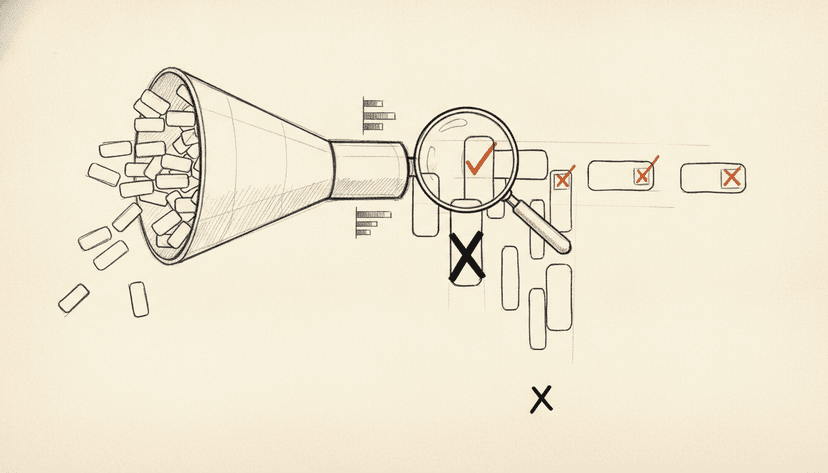
They give false precision on the tail. An 87% pass rate sounds like a real number. But that 13% failure rate — and the distribution within it — is where all the risk lives. LLM judges cluster failures in the obvious cases: responses that are clearly off-topic, clearly incomplete, clearly formatted wrong. The dangerous failures are subtle. They look like passes. They're the ones a domain expert would catch in the first thirty seconds of reading the output.
What Domain-Specific Failure Actually Looks Like
In healthcare AI specifically, the failure pattern is consistent: the output is fluent, organized, and responsive to the literal question. It's also wrong in ways that only surface with clinical context.
A patient asks about managing blood pressure with a new medication. The LLM judge scores the response highly: it covers lifestyle factors, explains the medication mechanism, advises following up with their provider. What the judge misses: the patient mentioned in their previous message that they're on an MAOI, and the recommended lifestyle advice includes dietary patterns that interact with MAOI therapy. The response didn't hallucinate. It failed to synthesize context that a clinician would have held throughout the conversation.
The judge saw a complete, well-organized health response. A nurse would have seen a safety gap.
This isn't limited to healthcare. In legal AI, an LLM judge will score a response on clarity and citation density while missing that the cited precedent was recently overturned. In financial AI, it'll score a response on comprehensiveness while missing that the recommended strategy has different tax treatment in the user's jurisdiction. Domain failure is invisible to a generalist judge. That's the definition of domain failure.
The Right Role for Automated Evaluation
None of this means you shouldn't use LLM judges. It means you should use them for what they're actually good at.
LLM judges are reliable for evaluating things that don't require deep domain expertise: Is this response on-topic? Does it follow the expected structure? Is it free of obvious formatting errors? Is the tone appropriate? Does it avoid flagged content categories? These are real quality dimensions and a capable judge handles them well at scale. Running these checks on every output in production is a reasonable use of automated evaluation.
LLM judges are unreliable for safety-critical correctness, domain-specific completeness, and any failure mode where "looks right" and "is right" can diverge. These aren't tasks you automate away. These are tasks you protect.
The Framework: When to Trust Your LLM Judge
Here's how I think about it.
Trust your LLM judge when: the failure modes you care about are surface-level and a capable generalist model would recognize them. Format compliance, content policy, topic relevance, response length constraints, obvious hallucinations. Automate these aggressively. Run them continuously. They're fast, cheap, and good enough.
Don't trust your LLM judge when: the failure mode requires specialized knowledge to recognize. Clinical appropriateness, legal accuracy, financial suitability, code correctness in a specific framework, safety completeness for a specific patient population. These require human reviewers with domain expertise. There's no shortcut.
Flag for human review when: pass rates are very high. This sounds backwards, but it's the right signal. If your LLM judge is passing 95% of outputs, either your system is excellent or your judge isn't sensitive enough to catch the failures that exist. The only way to tell the difference is a human reading actual outputs. Build in a regular cadence — I recommend weekly — where a domain expert reads a sample of the outputs the judge passed. You're looking for the ones that should have been caught.
Never use your LLM judge as the final gate for production on safety-critical outputs. This is the hard line. If your product lives in a domain where a wrong answer can hurt someone, you need a human downstream of the outputs that matter. Not on every output forever — that doesn't scale. But on a meaningful sample, on a regular schedule, by someone with the expertise to catch what the judge can't.
The Structural Fix
The seduction of LLM judges is that they promise to remove humans from the quality loop. They don't. They shift human effort from reviewing outputs to reviewing judge calibration — and if you skip that second step, you haven't improved quality assurance. You've hidden its absence behind a dashboard.
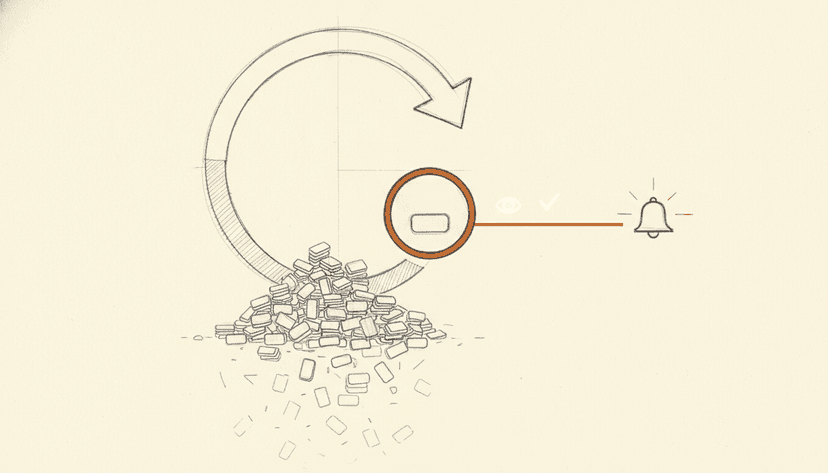
The teams that get this right use LLM judges as a first pass and human reviewers as a ground truth calibration layer. They run their domain expert through a random sample of passed outputs monthly, tracking whether the expert disagrees with the judge's assessments. When expert agreement drops, the judge has drifted and needs recalibration. When expert agreement is high, the team earns more confidence in the automated layer — but they don't eliminate the expert review. They maintain it.
For safety-critical domains, the minimum viable quality stack is: automated evaluation for surface-level correctness, human expert review for domain correctness, and a feedback loop that uses human disagreements to continuously improve the automated layer.
The LLM judge is one layer in that stack. It's a useful layer. It's not the foundation.
The pharmacist who flagged our drug interaction issue was the quality system we hadn't built yet. Build the automated layer for the easy cases. Then build the human layer for the cases where easy and important aren't the same thing.