Mostly about building products, healthcare tech, and lessons learned along the way.
Loading articles
5 Reasons to Solve for Adoption Before Building Your Digital Health Tool | Clint Johnson
5 Reasons to Solve for Adoption Before Building Your Digital Health Tool
The product is not the problem. The workflow is.
You built a great digital health product. Clinicians love the idea. But no one is buying. Why?
Too many companies start with a great idea, build the tech first, and then struggle to get adoption. Hospitals, payers, and health systems don't buy tech just because it works. They buy solutions that:
✔ Fit into their existing workflows
✔ Meet compliance requirements
✔ Deliver measurable ROI
Solve for adoption before you write a single line of code. Here's why.
1. The Person Writing the Check Doesn't Use the App
The end-user isn't the buyer, and the buyer isn't the end-user. If you don't sell to both, the product stalls.
The Disconnect
You build a great app, but:
Clinicians don't push for adoption
IT de-prioritizes it
Leadership won't approve the budget
Why This Happens
Healthcare purchasing decisions involve multiple stakeholders who each need a different argument.
The Clinical Champion loves your product but has no budget authority. They need to convince IT, procurement, and executive leadership.
The IT Department cares about security, integration complexity, and vendor management. A beautiful UX doesn't matter if it creates support headaches.
The CFO wants clear ROI metrics and implementation costs. "Better patient outcomes" isn't enough. They need numbers.
How to Bridge the Gap
Start by mapping your stakeholder journey:
Identify all decision makers early in the sales process
Create different value propositions for each stakeholder type
Build coalition selling into your go-to-market strategy
Provide ROI calculators and implementation timelines upfront
2. Integration Strategy Is More Important Than Your MVP
A great user experience doesn't matter if your product can't connect to hospital workflows. Integration is the first question buyers ask, not the last.
Where Most Products Get Stuck
🚨 Custom integrations per client create scalability problems
🚨 for seamless data exchange
🚨 requirements and ongoing maintenance
I help teams ship AI in production — audits, consulting, custom agents, and eval systems. Start with an AI Audit (from $5k) for an honest read on what to build.
Most health systems run on legacy infrastructure patched together over decades. Your modern API-first architecture needs to work alongside:
EHR systems (Epic, Cerner, Allscripts) with different data models
HL7v2 interfaces that predate REST APIs by 20 years
Custom databases built by long-gone contractors
Security protocols that assume everything is a threat
How to Solve It
✅ Predefine how data moves in and out of your system
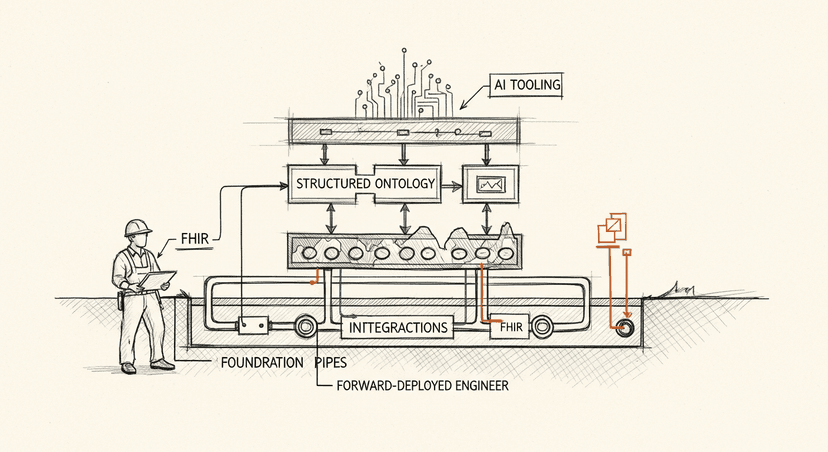
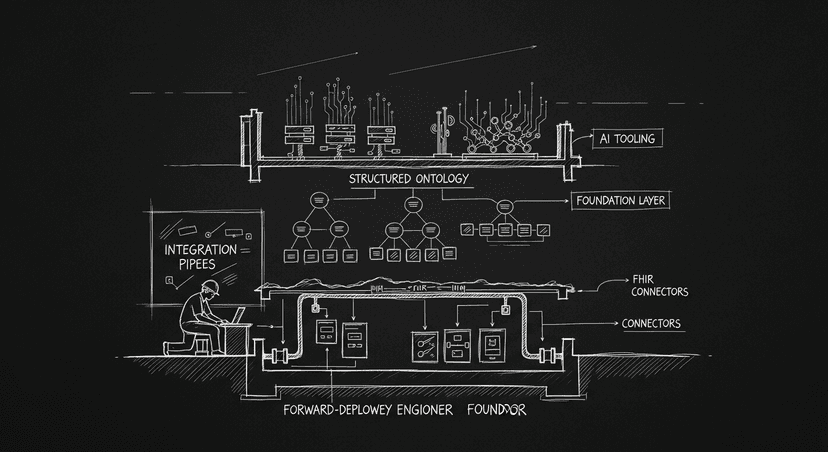
✅ Plan for multiple integration paths (FHIR, HL7v2, custom APIs, file exports)
✅ Don't assume API access is easy - build for the worst-case scenario
Design your data architecture around three principles.
Start with standards, plan for exceptions. Build FHIR-first, but have a plan for non-compliant systems. You'll need it.
Make data portable. Health systems need to own their data. Make it hard to export and they won't buy.
Think in workflows, not features. How does your data fit into existing clinical workflows? Where does it go after your system processes it?
3. FHIR Marketplaces Won't Drive Adoption for You
What I Thought vs. Reality
❌ Expectation: Once you're listed in an EHR marketplace, hospitals will start adopting
✅ Reality: Hospitals still require custom integration work and direct sales engagement
The Marketplace Mirage
Getting listed in Epic's App Orchard or Cerner's marketplace feels like validation. It is, for your product. But it's not a distribution strategy.
Here's what actually happens:
Approval process takes 6-12 months of back-and-forth with vendor review teams
Listing doesn't guarantee visibility among thousands of other apps
Hospitals still need implementation support that requires direct sales relationships
Custom configurations are almost always required for enterprise deployments
What Works Instead
✅ Use marketplaces for validation, not distribution
✅ Sell directly to health systems first to build case studies
✅ Leverage marketplace approval as a trust signal in direct sales
Focus your early energy on three things.
Direct relationships with health system innovation teams and clinical champions who can pilot your solution. Marketplace listings don't replace these.
Reference customers who'll speak at conferences and provide case studies for future sales. Social proof from a peer physician closes faster than any sales deck.
Integration partnerships with system integrators who already have health system relationships.
4. Without a Champion, Your Product Won't Get Deployed
What Happens Without a Champion
IT deprioritizes your implementation
Training gets postponed indefinitely
Usage drops off after initial pilot
Contract renewal becomes uncertain
The Champion Profile
Successful digital health adoptions always have an internal champion. The profile is consistent:
Has clinical credibility. Respected by peers, understands workflows. Understands technology. Can bridge clinical and IT requirements. Has organizational influence. Can navigate approval processes. Is personally invested. Sees your solution solving their specific problem.
How to Identify and Cultivate Champions
Look for the frustrated innovator. Find clinicians who are already solving the problem you address with spreadsheets, workarounds, or manual processes. They're motivated.
Provide value before asking for anything. Share research, invite them to advisory boards, make introductions to other innovators.
Make them the hero. Frame your solution as enabling their vision, not replacing their expertise.
Support their internal advocacy. Give them presentation materials, ROI calculations, and peer references they can use without you in the room.
5. Don't Wait for Regulatory Changes to Build Your Product
The Waiting Game
Healthcare moves slowly. Building for regulatory changes that haven't happened yet is gambling with runway.
Why This Approach Fails
Regulations change slowly. What seems inevitable may take years or get watered down. Implementation varies. Even when regulations pass, health systems interpret them differently. Market timing matters. Being too early is often worse than being too late.
How to Build for Today While Preparing for Tomorrow
Solve current pain points with existing regulations and reimbursement models. Design flexible architectures that can adapt to future regulatory changes. Build for the most restrictive environment. If it works in heavily regulated markets, it works everywhere.
The Pragmatic Approach
Start with what health systems need today:
Cost reduction through workflow automation Quality improvement through better data visibility Compliance support for existing regulations Revenue cycle optimization within current reimbursement models
Then design your platform to evolve as regulations change. Don't bet the company on future policy shifts.
The Bottom Line: Solve Adoption First, Build Second
The most successful digital health tools aren't just well-built. They're built for the organizational context they have to survive in.
Your Pre-Build Checklist
✅ Map all stakeholders in the purchasing decision
✅ Define integration requirements for your target health systems
✅ Identify potential champions in your target market
✅ Validate willingness to pay with current reimbursement models
✅ Plan for regulatory compliance without betting on future changes
The Adoption-First Mindset
Before you write your first line of code, answer these questions:
Who has the budget to buy your solution?
What workflows will your product integrate with?
Who will champion your solution internally?
How will you prove ROI to financial decision makers?
What happens if current regulations don't change?
If you can't answer these questions, you're not ready to build yet.
The graveyard of digital health startups is full of technically brilliant products that solved real problems but couldn't navigate organizational adoption. The technology wasn't the problem. The go-to-market was.
Don't join them.
Build for adoption first. Everything else is just features.