What Autonomous Vehicles Taught Me About Multi-Agent AI Design

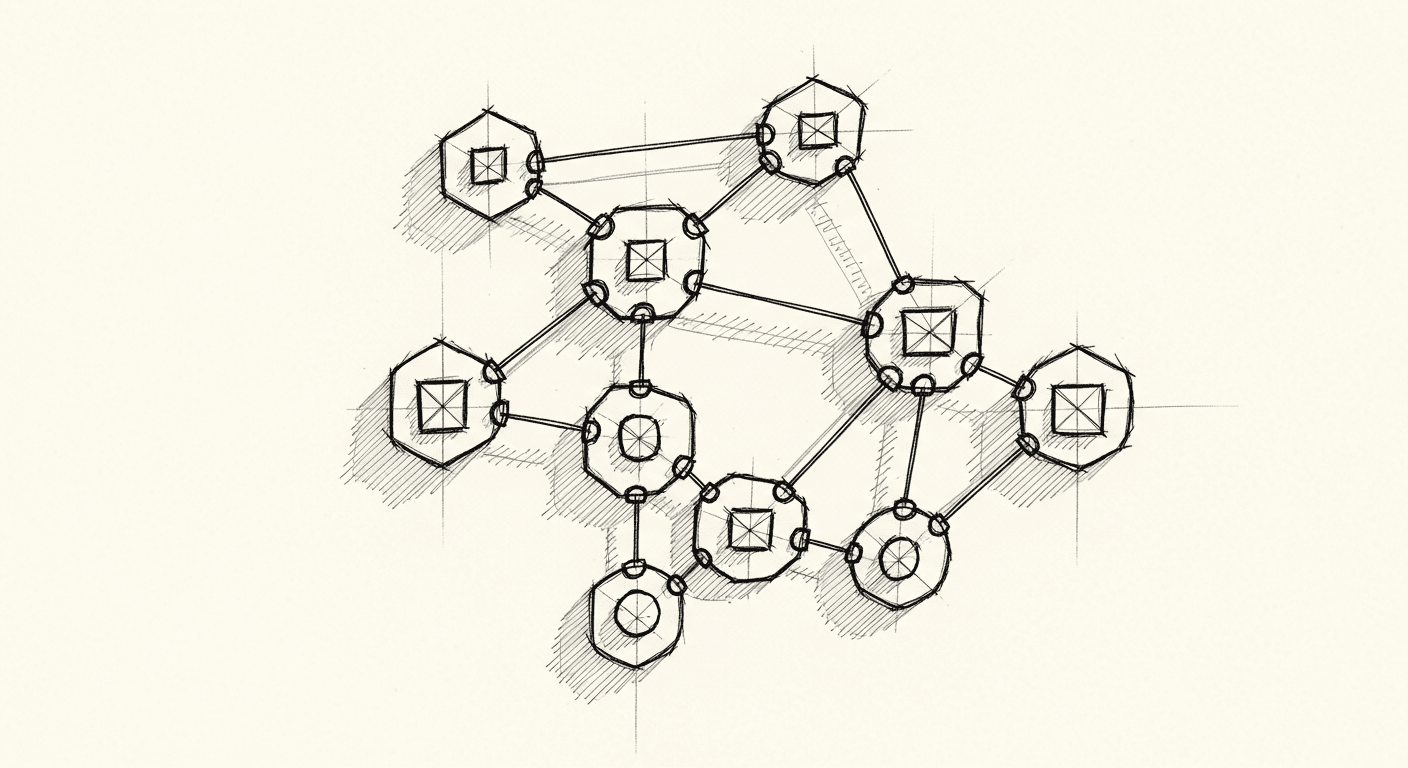
What autonomous vehicles teach us about agent coordination
Five percent. That's the number that stopped me cold.
Researchers at UC Berkeley's BAIR Lab ran a large-scale deployment of RL-controlled autonomous vehicles on a live highway. Not a simulation: a real highway, real human drivers, real conditions. Their finding: when just 5% of vehicles on the road were under autonomous control, average fuel consumption dropped by 11% and traffic waves, the phantom slowdowns caused by one person braking, nearly disappeared across the entire road.
No central coordinator. No inter-vehicle communication. No shared state. Each AV simply learned a local policy through reinforcement learning, optimizing its own behavior relative to the cars immediately around it. The emergent result was global: smoother flow for every driver on the road, including the 95% who had no idea the experiment was happening.
I've spent a lot of the last few years thinking about multi-agent AI systems, mostly in healthcare. This finding from the AV world reframed a question I had been asking the wrong way.
The Default Assumption in Multi-Agent AI
When most engineers, myself included, sit down to design a system with multiple AI agents, the instinct is to reach for orchestration. There will be a coordinator. Agents will report back. There will be a central state that everyone reads from and writes to. Messages will flow through a well-defined topology.
This makes sense on paper. Orchestrators are easy to reason about. You can trace decisions. You can debug failures. The flow is legible.
But there's a cost that often goes unexamined: the orchestrator becomes a bottleneck, a single point of failure, and a constraint on scale. As the number of agents grows, the cost of explicit coordination explodes. Every agent needs to check in. Every decision needs to be routed. Latency accumulates. The overhead of managing coordination starts to rival the cost of the actual work.
The AV research poses a different question: what if coordination is an emergent property of locally-optimal behavior, not a system you design from the top down?
Decentralized Control and What It Actually Means
The RL controllers in the BAIR study didn't coordinate. They didn't need to. Each controller learned, through millions of simulated miles, how to behave in a way that, when aggregated across many vehicles, produced smooth flow. The global outcome was a side effect of individual agents doing local optimization well.
Related Articles

Your Support Team Is Claude Code on a Timer
An L2 support engineer that's just Claude Code on a /loop, with all its state living in Slack reactions. No app, no database, no deploy — and it only pings you when it's real.

What an AI Audit Actually Finds
Most teams asking for AI don't have a model problem. They have a "which problem is even worth it" problem. Here's what a real AI audit surfaces — and why "don't build this" is often the most valuable line in the report.
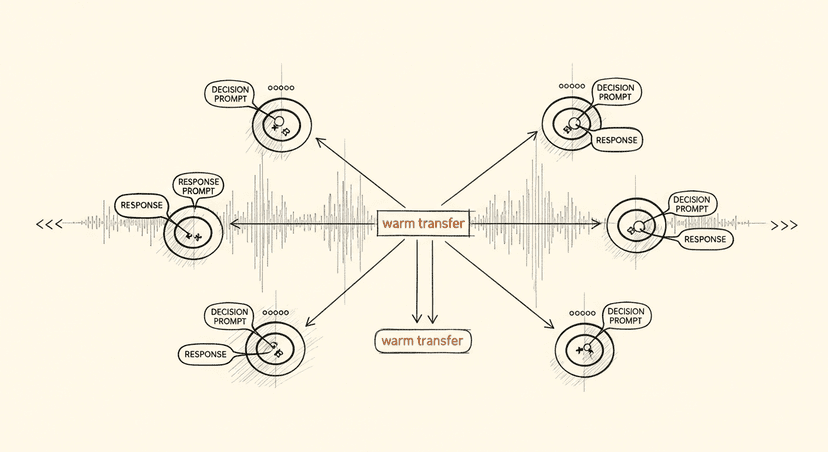
Inside a Production Voice Agent: How the Stack Actually Ships
Production voice-AI has converged on a pattern: graph-based conversations, separated decision and response prompts, synthetic-call regression testing, and per-component latency budgets. Why the stack looks the way it does — and what most teams are still missing.
Building something like this?
I help teams ship AI in production — audits, consulting, custom agents, and eval systems. Start with an AI Audit (from $5k) for an honest read on what to build.